Many people enjoy simple home remedies before bed, and cloves are among the spices traditionally used for this purpose. These small, dried flower buds contain natural plant compounds that have attracted scientific interest. If you’ve been wondering about the benefits of eating cloves at night, the potential advantages include temporarily fresher breath, antioxidant intake, and possible digestive support.
However, research specifically examining cloves consumed at bedtime remains limited. Most studies investigate clove extracts, essential oils, or individual compounds such as eugenol rather than small amounts of whole cloves eaten before sleeping.
Therefore, cloves are best viewed as a flavorful addition to a balanced diet, not as a treatment for disease. Understanding their possible effects, limitations, and safety precautions can help you decide whether to include them in your evening routine.
Why People Eat Cloves at Night
People often choose cloves in the evening because of their traditional use in digestive remedies, distinctive aroma, and naturally occurring plant compounds.
Some people believe consuming a small amount before bedtime may:
- Temporarily freshen breath.
- Provide antioxidant compounds.
- Offer digestive comfort after meals.
- Add flavor to soothing evening drinks.
- Complement a healthy nighttime routine.
However, these potential effects come from the spice itself rather than any proven advantage of eating it at night.
Although digestion continues during sleep, researchers have not established that bedtime consumption makes cloves more effective.
In addition, cloves do not replace the benefits of adequate sleep, balanced nutrition, and regular physical activity.
Nutritional Benefits of Eating Cloves
Cloves contain several nutrients and naturally occurring plant chemicals.
These include:
- Eugenol: An aromatic compound responsible for much of the spice’s characteristic smell.
- Manganese: A mineral involved in normal metabolism and antioxidant enzyme function.
- Dietary fiber: A nutrient that supports normal digestive function.
- Vitamin K: A vitamin involved in normal blood clotting.
- Calcium: A mineral that supports bones and other body functions.
- Potassium: An electrolyte involved in muscle and nerve function.
- Polyphenols: Plant compounds that can demonstrate antioxidant activity.
However, the nutritional contribution of one or two cloves is small because people typically consume this spice in tiny quantities.
Therefore, cloves should complement a varied diet rather than serve as a primary source of essential nutrients.
Potential Health Benefits of Eating Cloves at Night
Cloves have a long history of culinary and traditional use. Nevertheless, their potential health effects require careful interpretation because laboratory findings do not always translate into benefits for people.
Benefits of Cloves for Digestion at Night
One reason people consume cloves after meals is their traditional association with digestive comfort.
Laboratory and animal research has explored whether clove compounds influence digestive processes. However, strong human evidence showing that chewing whole cloves reduces bloating, gas, or indigestion remains limited.
Some people may enjoy the flavor after dinner, while others may experience stomach irritation.
Therefore, if you regularly experience digestive discomfort, consider your overall eating habits rather than relying on cloves alone.
In addition, learning about foods high in fiber may help you support digestion through a more varied diet. Fiber-rich foods such as vegetables, fruits, whole grains, and legumes play an established role in maintaining normal bowel function.
Benefits of Chewing Cloves for Fresh Breath
Cloves have a strong, aromatic flavor that can temporarily mask unpleasant breath odors.
Their essential oil also contains compounds that demonstrate antimicrobial activity in laboratory settings.
However, chewing a whole clove has not been proven to prevent dental disease or eliminate the underlying causes of persistent bad breath.
For this reason, maintain regular brushing, flossing, and dental checkups.
Antioxidant Benefits of Eating Cloves
Cloves contain polyphenols and eugenol, both of which have demonstrated antioxidant activity in laboratory research.
Antioxidants interact with reactive molecules involved in oxidative processes.
However, a food’s antioxidant activity in laboratory testing does not establish that consuming a small amount will prevent oxidative damage or disease in humans.
Nevertheless, using cloves as a spice can contribute to dietary variety and provide additional plant compounds.
Potential Immune Benefits of Cloves
Good nutrition helps the immune system function normally.
Cloves contain plant compounds with antioxidant and antimicrobial properties in laboratory experiments.
However, researchers have not established that eating cloves before bed strengthens immunity or prevents infections.
Instead, adequate sleep, nutritious food, physical activity, and recommended preventive healthcare remain more reliable ways to support immune health.
Oral Health Benefits of Eating Cloves
Eugenol has a history of use in certain dental preparations because of its local anesthetic and other properties.
However, concentrated dental products differ significantly from whole cloves.
Chewing cloves may temporarily freshen the mouth, but it does not replace professional dental treatment.
In addition, applying concentrated clove oil directly to the gums can irritate or damage sensitive tissues.
Therefore, avoid using homemade concentrated preparations to treat tooth pain without professional guidance.
Potential Benefits of Cloves for Blood Sugar
Some preliminary research has investigated clove extracts and their effects on glucose metabolism.
However, evidence remains insufficient to conclude that eating whole cloves at night meaningfully improves blood sugar control.
Furthermore, studies involving concentrated extracts do not necessarily apply to culinary portions.
People with diabetes should continue following their prescribed treatment plans and avoid substituting cloves for medication.
Cloves and Potential Liver Health Benefits
Researchers have examined eugenol and other clove compounds in laboratory and animal studies involving oxidative stress.
Some findings suggest potentially protective biological effects under specific experimental conditions.
However, these results do not prove that eating cloves improves human liver function.
In fact, excessive exposure to concentrated clove oil can cause serious liver injury.
Therefore, people with liver disease should avoid medicinal clove preparations unless their healthcare professional approves them.
Anti-Inflammatory Benefits of Cloves
Inflammation is a normal part of the body’s response to injury and infection.
Laboratory research suggests that certain clove compounds can influence biological pathways associated with inflammation.
However, scientists have not established that eating one or two cloves before bed reduces inflammation in humans.
Instead, cloves may simply contribute flavor and plant compounds to an overall nutritious diet.
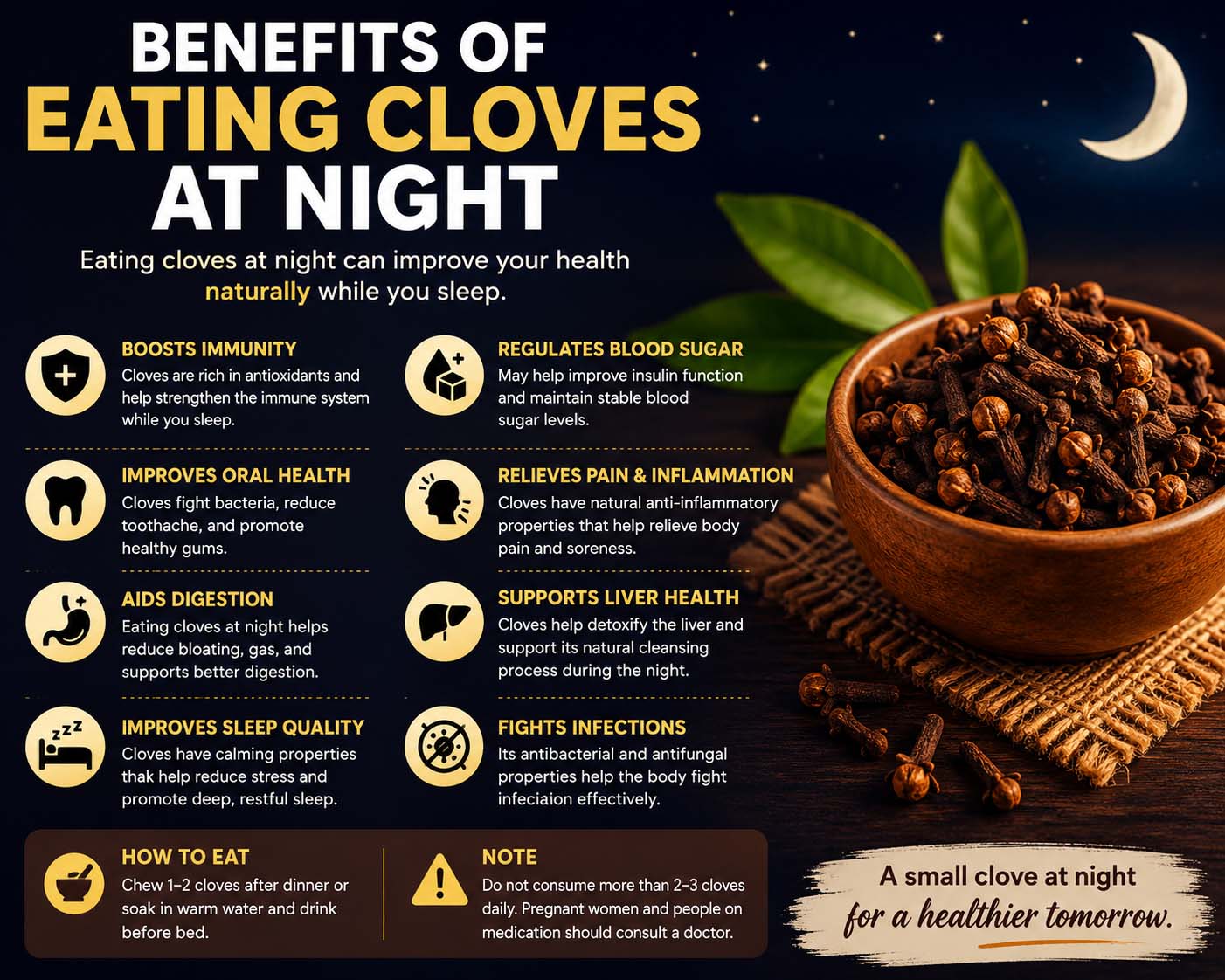
Summary of Eating Cloves at Night
The following table distinguishes traditional uses and preliminary findings from established health benefits.
| Potential Benefit | What Current Evidence Suggests |
|---|---|
| Digestion | Traditional use exists, but human evidence remains limited. |
| Breath freshness | Strong aroma may temporarily mask unpleasant odors. |
| Oral health | Eugenol has dental applications, but chewing cloves is not a substitute for oral care. |
| Antioxidants | Cloves contain compounds with laboratory antioxidant activity. |
| Immune health | No convincing evidence that bedtime cloves boost immunity. |
| Blood sugar | Preliminary extract research does not establish benefits from whole cloves. |
| Liver health | Laboratory findings do not demonstrate improved liver health in humans. |
| Inflammation | Certain compounds show experimental activity, but clinical benefits remain uncertain. |
Overall, cloves offer culinary value and interesting plant compounds. However, their medicinal benefits require more high-quality human research.
Benefits of Eating 2 Cloves at Night
Many people specifically ask about the benefits of eating 2 cloves at night because traditional wellness routines sometimes recommend this amount.
A small culinary portion may offer:
- A distinctive aromatic flavor.
- Small quantities of antioxidant compounds.
- A simple addition to food or warm drinks.
- Temporary breath-freshening effects.
However, there is no established medical recommendation to consume exactly two cloves before sleeping.
In addition, researchers have not demonstrated that two cloves provide greater benefits than using the spice at another time of day.
Therefore, avoid treating this quantity as a scientifically proven dose.
For most people, incorporating modest amounts into food is a more practical approach than following a strict bedtime remedy.
What Are the Benefits of Eating Cloves at Night?
The most realistic benefits relate to the spice’s culinary properties and naturally occurring compounds.
For example, cloves may:
- Add flavor without requiring extra sugar.
- Temporarily freshen breath.
- Contribute small amounts of plant antioxidants.
- Make warm, unsweetened drinks more enjoyable.
- Support dietary variety.
However, eating cloves at night has not been proven to improve sleep, accelerate metabolism, detoxify the body, or treat digestive disorders.
Consequently, expectations should remain realistic.
Benefits of Eating Cloves at Night for Women
The potential effects of cloves are generally similar for women and men.
Women may enjoy cloves as a culinary ingredient because they:
- Provide aromatic flavor.
- Contain antioxidant compounds.
- Contribute small quantities of minerals.
- Offer variety in meals and beverages.
Cloves contain manganese, a mineral involved in several normal body processes. However, one or two cloves do not provide enough nutrition to replace a balanced diet.
In addition, people exploring nutrients associated with bone health may want to understand the benefits of d3 and k2.
Some traditional remedies claim that cloves improve hormonal balance, fertility, or menstrual health.
Nevertheless, current clinical evidence does not adequately support these claims.
Pregnancy and Breastfeeding Precautions
Pregnant or breastfeeding women can encounter cloves in ordinary culinary preparations.
However, the safety of concentrated clove extracts, essential oils, and medicinal doses during pregnancy or breastfeeding remains insufficiently established.
Therefore, avoid medicinal preparations unless a qualified healthcare professional recommends them.
Benefits of Eating Garlic Cloves at Night
People sometimes confuse spice cloves with garlic cloves because both contain the word “clove.”
However, they come from different plants and contain different active compounds.
Garlic belongs to the Allium genus, while the clove spice comes from the dried flower buds of Syzygium aromaticum.
Researchers have investigated garlic preparations for possible effects on cardiovascular risk factors, including blood pressure and cholesterol.
However, results depend on the preparation, dosage, and study conditions.
Clove spice, by comparison, contains eugenol and other aromatic plant compounds.
Although both foods can contribute to a varied diet, neither has a scientifically established special benefit simply because someone consumes it before bedtime.
How to Eat Cloves at Night Safely
There are several simple ways to include cloves in your evening meals or drinks.
For example, you can:
- Add a small pinch of ground cloves to warm milk.
- Mix a little ground clove into herbal tea.
- Sprinkle the spice over oatmeal.
- Add a whole clove while preparing a warm beverage, then remove it before drinking.
- Use ground cloves in a small evening snack.
Similarly, understanding the benefits of drinking warm water may help you choose another simple addition to your evening routine. Proper hydration supports normal body functions, although warm water has no proven special detoxifying effects.
However, avoid swallowing whole cloves without chewing because they are hard and may create a choking risk.
In addition, do not substitute concentrated clove essential oil for ordinary culinary cloves.
Is Chewing Whole Cloves Necessary?
No. You do not need to chew whole cloves to enjoy their flavor or include their natural compounds in your diet.
Ground cloves and small culinary amounts used in food provide alternative options.
Therefore, choose the preparation you find comfortable rather than assuming chewing provides superior health benefits.
Best Time for Eating Cloves at Night
There is no scientifically established best time to consume cloves.
Some people prefer using them after dinner, while others add them to an evening beverage.
However, recommendations such as eating cloves 30 minutes before bedtime lack strong clinical evidence.
If you experience heartburn or reflux, consuming strong spices close to bedtime may be uncomfortable.
Therefore, consider your digestive tolerance and personal preferences.
Likewise, people who enjoy herbal drinks may find information about the best time to drink dandelion tea useful when planning their daily routine. Because some herbal drinks may increase urination, the timing of evening beverages can also affect nighttime comfort.
Side Effects of Eating Cloves at Night
Although people commonly use cloves in cooking, excessive intake or concentrated preparations may cause adverse effects.
Possible problems include:
- Mouth irritation.
- Stomach discomfort.
- Heartburn in sensitive individuals.
- Allergic reactions.
- Potential medication interactions.
In addition, concentrated clove oil presents substantially greater risks than ordinary culinary use.
Swallowing clove essential oil can cause serious poisoning, including liver injury, particularly in children.
Therefore, never consume concentrated clove oil as a bedtime remedy.
For general guidance on evaluating herbal products, consult the National Center for Complementary and Integrative Health’s information on herbs and supplements.
Who Should Be Careful?
Speak with a healthcare professional before regularly using medicinal quantities of cloves if you:
- Take anticoagulant or antiplatelet medication.
- Have a bleeding disorder.
- Have liver disease.
- Take medication for diabetes.
- Are pregnant or breastfeeding.
- Are preparing for surgery.
- Have experienced allergic reactions to cloves.
In particular, eugenol may influence platelet activity under certain experimental conditions.
However, the clinical significance of ordinary culinary intake is not fully established.
Therefore, people with relevant medical conditions should distinguish normal food use from concentrated supplements or extracts.
Common Myths About Clove Health Benefits
Several popular claims exaggerate what cloves can accomplish.
Myth: Cloves Cure Every Digestive Problem
Fact: Cloves have a history of traditional digestive use, but strong clinical evidence does not establish them as a treatment for digestive disorders.
Persistent bloating, abdominal pain, or indigestion deserves appropriate medical evaluation.
Myth: Eating More Cloves Produces Better Results
Fact: Increasing the amount does not guarantee greater benefits.
In fact, excessive consumption may increase irritation or other adverse effects.
Therefore, avoid large medicinal quantities without professional guidance.
Myth: Cloves Guarantee Better Sleep
Fact: Researchers have not established that eating cloves before bed directly improves sleep quality.
A consistent sleep schedule and appropriate sleep habits have stronger evidence behind them.
Myth: Cloves Can Replace Medication
Fact: Cloves are a culinary spice, not a replacement for prescribed treatment.
Therefore, never stop medication or delay necessary healthcare because of claims about natural remedies.
Frequently Asked Questions About Eating Cloves at Night
Is It Safe to Eat Cloves Every Night?
Small amounts of cloves used in ordinary cooking are generally acceptable for most healthy adults.
However, researchers have not established a specific safe daily medicinal dose of whole cloves.
If you experience irritation or take medications that may interact with clove preparations, seek professional advice.
Can Cloves Help With Bad Breath?
Cloves have a strong aroma that may temporarily mask unpleasant breath odors.
However, they do not address every underlying cause of bad breath.
Therefore, continue brushing, flossing, and maintaining regular dental care.
How Many Cloves Should I Eat?
There is no scientifically established number of cloves that people should eat before bedtime.
Instead, use modest culinary amounts according to your tolerance.
Avoid treating traditional recommendations of one or two cloves as a proven medical dosage.
Can Cloves Help With Weight Loss?
Eating cloves alone has not been shown to produce meaningful weight loss.
Instead, long-term weight management generally depends on overall dietary habits, physical activity, sleep, and other individual factors.
In addition, understanding the best time to workout may help you build a more consistent exercise routine. Choosing a schedule you can maintain is generally more useful than searching for a perfect exercise hour.
Can Children Eat Cloves?
Small amounts of ground cloves used in age-appropriate foods can contribute flavor.
However, whole cloves present a choking hazard for young children.
In addition, concentrated clove oil can be particularly dangerous if swallowed.
Therefore, keep essential oils out of children’s reach and avoid using medicinal clove preparations without pediatric guidance.
Should I Eat Cloves on an Empty Stomach?
There is no proven advantage to consuming cloves on an empty stomach.
Some people may experience irritation, particularly when consuming strong spices without food.
Therefore, if cloves cause discomfort, avoid eating them directly or use a small culinary amount with a meal.
Final Thoughts on the Benefits of Cloves at Night
The benefits of eating cloves at night are often discussed in traditional wellness practices, but scientific evidence for bedtime-specific effects remains limited.
Cloves contain eugenol and other plant compounds with interesting laboratory properties. They may also temporarily freshen breath and add flavor to evening meals or beverages.
However, these characteristics do not establish cloves as a treatment for digestive problems, poor sleep, diabetes, inflammation, or liver disease.
For most healthy adults, using modest amounts of cloves in food is a reasonable way to enjoy this aromatic spice.
Above all, balanced nutrition, regular physical activity, adequate sleep, and appropriate medical care remain the foundations of good health.
If you have an ongoing medical condition, take prescription medication, or plan to use concentrated clove products, consult your healthcare professional before making them part of your routine.